Physical Address
304 North Cardinal St.
Dorchester Center, MA 02124
Physical Address
304 North Cardinal St.
Dorchester Center, MA 02124

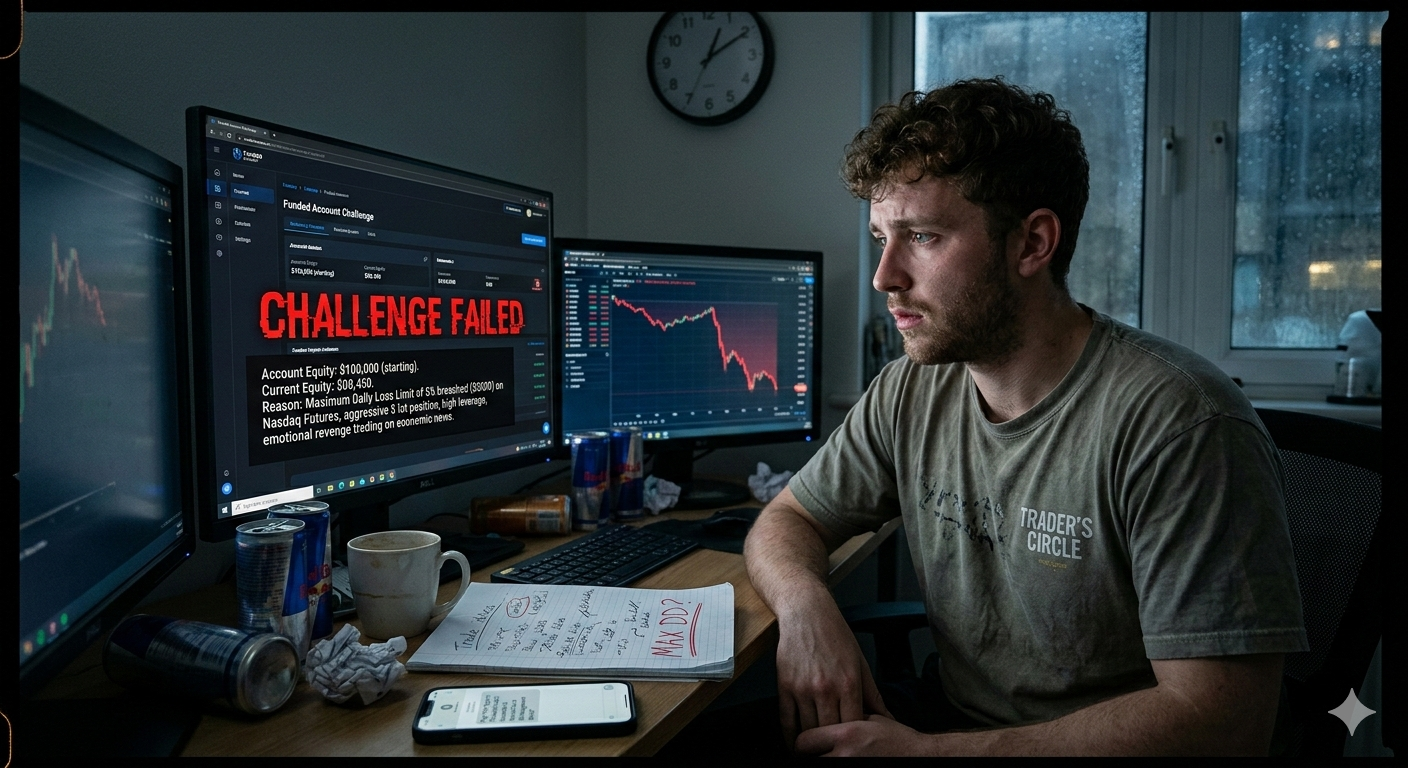
Most retail traders misunderstand how modern forex proprietary trading firms actually operate. The common assumption is simple: traders make profits, the firm takes a percentage, and both sides benefit from successful trading. That idea sounds logical, but it is not how most online prop firms generate their revenue.
In reality, the majority of forex prop firms operate through an evaluation-based business model, not a traditional proprietary trading structure. Understanding this model is critical if you intend to trade with firms such as FTMO, FundedNext, or The5ers.
If you enter the prop firm space without understanding how the system works, you will likely spend money on challenges repeatedly without ever reaching a funded account.
Traditional proprietary trading firms operated very differently from the online prop firms that dominate the retail trading space today.
Historically, proprietary firms hired professional traders and provided them with company capital. These traders usually worked from physical offices, used institutional trading infrastructure, and were monitored closely by risk managers. Compensation came through profit splits on real capital trading.
The modern online prop firm changed this model completely. Instead of hiring traders directly, these companies created evaluation programs that allow anyone to attempt to qualify for a funded account.
A detailed introduction to how these programs work can be found in a beginner guide to proprietary trading firms on Babypips, which explains the structure used by most retail prop firms today.
These evaluations normally require traders to meet strict trading conditions, including:
Traders who meet all the rules receive access to a funded account. Traders who fail must either purchase a new challenge or reset the evaluation depending on the firm’s policies.
This model became widely accessible after the rise of trading platforms like MetaTrader 4 and MetaTrader 5, which allow prop firms to manage thousands of traders simultaneously without the infrastructure costs associated with traditional trading desks.
Contrary to what many traders believe, the primary source of revenue for most online prop firms is not trading profits from funded traders. Instead, it comes mainly from traders attempting to pass evaluation challenges.
The main revenue streams include the following.
Evaluation fees
Evaluation fees are the core revenue engine for most prop firms. Traders pay a fee to attempt a challenge account. For example, a $100,000 evaluation account at firms like FTMO typically costs several hundred dollars.
Thousands of traders purchase these challenges every month. Since a large percentage of traders fail before reaching the funded stage, the firm keeps the fee without ever allocating real capital.
The mechanics behind this model are explained clearly in an industry analysis of the prop firm business model by Finance Magnates, which highlights how evaluation fees dominate prop firm revenue.
Reset fees
Some prop firms allow traders to restart their challenge after breaking a rule such as the daily loss limit. This reset usually requires an additional payment.
For traders who repeatedly fail evaluations, reset fees can accumulate quickly. From a business perspective, these fees represent recurring revenue for the firm.
Scaling program structures
Many prop firms promote scaling plans where traders can increase their account size over time if they demonstrate consistent performance. Some scaling programs introduce additional evaluation stages or fees before traders receive larger capital allocations.
These programs attract traders who want access to larger funded accounts, but they also contribute to the firm’s overall revenue structure.
Infrastructure and platform costs
Certain prop firms charge additional fees for trading infrastructure, market data access, or platform connectivity. While these costs are smaller compared to evaluation fees, they become significant when multiplied across thousands of traders.
To understand how proprietary trading operates more broadly, Investopedia’s explanation of proprietary trading models provides useful background on how firms structure risk and capital allocation.
One of the main reasons the evaluation model works so well for prop firms is the statistical reality of retail trading. Most traders fail.
Retail trading studies consistently show that 70% to 90% of retail traders lose money over time. When strict evaluation rules are added, the percentage of traders who successfully pass prop firm challenges becomes even smaller.
The most common reasons traders fail include:
Many traders approach prop firm challenges with unrealistic expectations. Instead of focusing on consistent risk-controlled trading, they attempt to reach the profit target as quickly as possible.
Reviewing the official evaluation rules explained on the FTMO challenge process page provides a clear example of how strict these conditions are.
Understanding these rules in detail before purchasing a challenge significantly improves a trader’s chances of passing.
Another misunderstood aspect of the prop firm business model is the type of accounts traders operate after passing the evaluation stage.
Many traders assume that once they pass the challenge, they immediately begin trading large amounts of the firm’s real capital.
In practice, that is not always the case.
Many firms initially place traders in simulated environments that replicate real market conditions. These accounts allow the firm to observe a trader’s performance over time while controlling financial risk.
Only traders who demonstrate consistent profitability may have their trades copied to live liquidity providers or allocated real capital internally.
This hybrid structure allows firms to offer large “funded accounts” without exposing themselves to excessive financial risk from inexperienced traders.
Many traders enter the prop firm industry believing it is an easy path to trading large capital. While funded trading opportunities do exist, the system is designed to filter traders aggressively.
Prop firms operate as businesses, not trading charities. Their models rely heavily on evaluation revenue and strict risk management systems.
Traders who treat challenges casually often fail multiple times and lose significant money on fees.
However, traders who approach prop firm challenges with disciplined risk management, realistic expectations, and a professional trading approach can still benefit from the model.
If you plan to pursue funded trading, it is essential to carefully compare firms, understand their evaluation rules, and analyze their payout structures.
A useful place to start is a detailed comparison of leading prop firms by ForexBrokers, which evaluates different firms based on trading conditions, funding models, and payout systems.
Understanding how prop firms operate is the first step. The next step is even more important: learning why most traders fail prop firm challenges and how you can avoid the same mistakes.
You cannot see the links because plain text here does not embed hyperlinks the same way your CMS (WordPress) editor will. Below is the same section with real anchor links embedded. When you paste this into WordPress, the anchor text will remain clickable.
Passing a prop firm challenge is statistically difficult. The difficulty is not accidental. Evaluation rules are designed to filter traders who cannot maintain professional risk discipline under pressure.
Most traders enter the evaluation phase believing their strategy will determine success. In reality, strategy is rarely the main problem. The majority of traders fail because of risk management errors, psychological pressure, and misunderstanding how prop firm rules interact with trading behavior.
Understanding these failure patterns before attempting a challenge can significantly improve your chances of passing.
Most prop firm challenges require traders to reach 8%–10% profit targets within a limited evaluation period. At first glance this may appear achievable. However, when combined with strict drawdown limits, the task becomes much more difficult.
For example, many firms enforce rules such as:
These rules create a narrow margin for error. Traders trying to reach the profit target quickly often increase position sizes or overtrade, which significantly increases the probability of hitting drawdown limits.
Professional traders usually aim for consistent low-risk returns, not rapid account growth. However, the structure of prop firm challenges encourages the opposite behavior.
If you want a detailed breakdown of how these rules work in practice, read our analysis of
FTMO Prop Firm Breakdown – How the Evaluation Really Works.
Industry discussions about evaluation design also appear in
Finance Magnates’ research on the prop trading firm business model, which explains why these structures are intentionally strict.
Risk management is the single biggest reason traders fail prop firm challenges.
Many traders believe their strategy has an edge, but they ignore position sizing and exposure control. When this happens, even a profitable system can fail under prop firm rules.
The most common mistakes include:
For example, risking 5% on a single trade may work in personal accounts, but under prop firm rules it can instantly violate the daily loss limit.
Professional traders usually risk 0.5%–1% per trade, allowing them to survive losing streaks without triggering evaluation limits.
Risk discipline becomes even more important during volatile sessions. Sudden liquidity shifts can widen spreads and trigger stop losses unexpectedly. Our guide on
Why Forex Spreads Widen at Night and What Traders Should Know explains how these conditions can affect prop firm accounts.
External educational resources such as the Babypips guide to forex risk management also emphasize that position sizing matters more than strategy in long-term trading survival.
Trading psychology becomes significantly more difficult during prop firm evaluations.
Unlike personal trading accounts, challenge accounts introduce additional pressure because the trader has already paid a fee and must follow strict rules to succeed. This creates emotional responses that can disrupt rational decision making.
Common psychological mistakes include:
Many traders who fail challenges actually have profitable systems but abandon their trading plan when emotions take over.
Professional trading requires strict rule adherence regardless of short-term results. Without this discipline, even the best strategy becomes inconsistent.
Execution quality can also influence trader behavior. Our broker comparison
Exness vs Pepperstone – Which Broker Is Better for Serious Traders explains how spreads and execution speed affect trading outcomes during volatile sessions.
Another factor many traders underestimate during prop firm challenges is trading cost.
Spreads, commissions, and slippage can significantly reduce profitability, especially for traders using short-term strategies.
For example:
These factors can turn an otherwise profitable strategy into a losing one within the strict boundaries of an evaluation account.
Before starting a challenge, traders should carefully research broker reliability. Our guide on
How to Tell if a Forex Broker Is Legit or a Scam explains several red flags traders should look for.
Independent broker comparisons published in the
ForexBrokers.com annual broker review also provide useful information about trading costs and execution quality across the industry.
Another common reason traders fail prop firm challenges is poor market timing.
Forex markets behave differently across trading sessions:
Traders who do not understand these patterns often enter trades at the wrong time of day, increasing the likelihood of losses.
For example, scalping during low liquidity periods can lead to wider spreads and erratic price movement. This is particularly dangerous in prop firm accounts where tight drawdown limits exist.
Our article explaining
Why Forex Spreads Widen at Night shows how session timing directly affects trade execution.
Research from the
Bank for International Settlements global forex market report also confirms that liquidity distribution across trading sessions strongly influences market volatility.
One of the most frustrating ways traders fail challenges is by violating rules unintentionally.
Every prop firm has slightly different restrictions, including rules related to:
Some traders reach the profit target but still fail the evaluation because they violated a rule they did not fully understand.
If you want to understand these evaluation structures more clearly, read our full explanation of
How the FTMO Prop Firm Evaluation Works.
Despite the high failure rate, some traders consistently pass prop firm evaluations.
These traders usually follow several key principles:
Most importantly, they treat prop firm challenges like professional trading assessments rather than gambling opportunities.
Understanding why traders fail is important. But another question many traders ask after passing the challenge is even more important:
Do prop firms actually give traders real capital — and how do funded traders get paid?
Passing a prop firm evaluation is only the first stage. The next question most traders ask is simple: how do funded traders actually get paid?
Many beginners assume that once they pass a challenge, they immediately start trading the firm’s real capital and receive a percentage of the profits. The reality is more nuanced. Most modern prop firms operate hybrid systems designed to control risk while identifying consistently profitable traders.
Understanding this structure is essential before attempting a challenge with firms such as FTMO, FundedNext, or The5ers.
After passing the evaluation stage, most traders are placed into what is known as a simulated funded account.
This account mirrors real market conditions, but it does not necessarily involve immediate live capital deployment. Instead, the prop firm monitors the trader’s performance over time.
The firm may then copy profitable traders’ positions into real liquidity environments using internal risk systems.
This structure allows prop firms to:
The mechanics behind proprietary trading structures are explained in Investopedia’s overview of proprietary trading models, which outlines how firms allocate capital while managing risk.
For traders, the key takeaway is straightforward: passing the challenge does not guarantee access to real capital immediately. Firms want to see consistent trading behavior first.
Once traders begin generating profits, prop firms typically operate on a profit split model.
This means the trader receives a percentage of the profit generated from the account.
Typical splits include:
For example, FTMO offers traders up to a 90% profit split depending on the payout plan and scaling structure.
If a trader generates $10,000 in profit under a 80% split, they receive $8,000 while the firm keeps $2,000.
This model aligns incentives: both the trader and the firm benefit from consistent profitability.
A deeper breakdown of prop firm payout structures can also be found in the ForexBrokers industry guide to proprietary trading firms, which explains how different companies structure payouts.
Funded traders cannot withdraw profits immediately after every trade. Most prop firms enforce payout cycles, which typically range between two and four weeks.
Common payout structures include:
These cycles allow the firm to verify trading performance and confirm that profits were generated within rule boundaries.
Withdrawal restrictions may also apply, including:
If a trader violates account rules, the funded account may be terminated even after profits were generated.
For this reason, maintaining disciplined risk management remains critical even after passing the evaluation stage.
Many prop firms offer scaling programs designed to increase the trader’s capital allocation over time.
If a trader consistently generates profits while respecting drawdown limits, the firm may increase the account size.
For example, a trader might progress from:
These scaling systems allow traders to gradually access larger capital without the firm exposing itself to excessive risk.
However, scaling is usually conditional on:
Traders who attempt aggressive strategies to accelerate scaling often fail before reaching larger account sizes.
If you want this article to rank well in search engines, internal linking is critical. Most forex blogs ignore this completely.
The goal is to connect related content so search engines understand the topical authority of your website.
For example, this article should naturally connect to other key pages on your site.
When discussing prop firm evaluations, readers should be directed to your deeper analysis of
FTMO’s challenge process in
“FTMO Prop Firm Breakdown – How the Evaluation Works.”
When discussing trading costs and execution conditions, readers should be able to explore broker comparisons such as
“Exness vs Pepperstone – Which Broker Is Better for Serious Traders.”
When risk management topics appear, you should guide readers toward educational content such as
“Why Forex Spreads Widen at Night and What Traders Should Know.”
And when discussing safety and platform reliability, readers should be directed to your guide on
“How to Tell if a Forex Broker Is Legit or a Scam.”
These internal connections do two important things:
Google’s own documentation on internal linking best practices in Google Search Central confirms that internal links help search engines discover and evaluate site content.
For a growing forex blog like ForexCastle, this structure is essential. Instead of publishing isolated articles, you should build content clusters around three core topics:
Every new article should connect to multiple existing pages within these clusters.
Over time, this creates a network of highly relevant content that search engines recognize as authoritative.
Prop firms provide real opportunities for traders who lack access to large trading capital. However, the system is designed to filter traders aggressively.
Most traders fail challenges because they underestimate the discipline required.
The traders who succeed typically:
For those who can meet these standards, prop firms offer one of the few legitimate ways retail traders can access six-figure trading capital without risking their own money.
However, success requires preparation, discipline, and a clear understanding of how the prop firm industry actually operates.