Physical Address
304 North Cardinal St.
Dorchester Center, MA 02124
Physical Address
304 North Cardinal St.
Dorchester Center, MA 02124

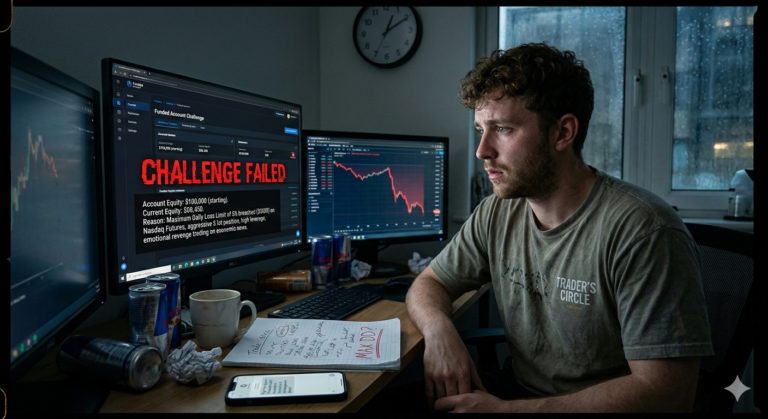
Trading safely with FundedNext is not about finding a winning strategy first. It is about understanding the environment you are operating in. Most traders approach funded accounts with a profit-driven mindset, but that approach fails quickly under prop firm conditions. FundedNext accounts are structured to reward discipline and eliminate inconsistency. If you ignore that reality, you will lose the account regardless of how good your strategy is.
A funded account operates differently from a personal account. You are not free to trade aggressively, recover losses at will, or experiment without consequences. Every action is constrained by predefined rules. These rules are not flexible, and violations result in immediate account termination. That makes rule comprehension the first requirement for survival.
The table below outlines the core structure you are trading within and what each rule actually implies in practice.
| Rule Type | Typical Limit | Practical Meaning |
|---|---|---|
| Daily Drawdown | ~5% | Maximum loss allowed in a single day; includes floating losses |
| Maximum Drawdown | ~10% | Total loss allowed on the account; once hit, the account is terminated |
| Profit Target (Evaluation) | 5%–10% | Required profit before funding; must be achieved without breaking rules |
| Consistency Expectation | Not fixed | Profit distribution must be stable; avoid one-day spikes |
The daily drawdown rule is one of the most misunderstood constraints. Many traders assume it only applies to closed trades. In reality, it often includes floating losses. This means a trade that is temporarily negative can still push your account into violation even if it later recovers. That single detail is enough to eliminate traders who rely on holding losing positions.
Maximum drawdown operates as a hard boundary across the lifespan of the account. It does not reset and does not adjust based on previous profits in most cases. Once your equity crosses that threshold, the account is finished. There is no recovery mechanism. This forces you to think in terms of preservation rather than recovery.
Profit targets create a different kind of pressure. They push traders into rushing performance, especially during evaluation phases. The common mistake is increasing risk to reach targets faster. That behavior usually leads to violating drawdown rules before the target is achieved. A controlled pace is more effective than an aggressive push.
Consistency expectations are less visible but equally important. FundedNext evaluates how profits are generated, not just the final number. A trading record that relies on a single large gain followed by inactivity or losses raises concerns. Stable performance over time is more aligned with what the firm expects.
Most failures occur not because traders lack knowledge, but because they fail to adapt their behavior to these constraints. The typical pattern is predictable and repetitive.
| Trader Behavior | Immediate Effect | Long-Term Outcome |
|---|---|---|
| Increasing lot size after losses | Faster drawdown accumulation | Daily or max drawdown violation |
| Overtrading multiple setups | Increased exposure | Higher probability of rule breach |
| Holding losing trades | Large floating losses | Sudden rule violation |
| Chasing profit targets aggressively | Emotional decision-making | Account termination |
The underlying issue is a profit-first mindset. Traders focus on how much they can make instead of how much they can safely risk. That approach works in unrestricted environments but fails under prop firm conditions. FundedNext accounts are designed to penalize uncontrolled risk, not reward aggressive returns.
A shift in mindset is required. The objective is not rapid growth but controlled survival. Once you understand that survival is the primary goal, your decision-making changes. You begin to prioritize risk limits, reduce exposure, and accept slower progress. This is not optional. It is the only approach that aligns with the structure of the account.
A functional trading framework must be built around these constraints. Without it, consistency is not possible. The framework should define how much risk is taken, how often trades are placed, and when trading stops for the day.
| Component | Safe Range | Purpose |
|---|---|---|
| Risk per Trade | 0.5% – 1% | Limits damage from individual losses |
| Daily Loss Cap (self-imposed) | 2% – 3% | Creates buffer below firm’s limit |
| Trades per Day | 2 – 3 | Reduces overexposure |
| Stop Loss Usage | Mandatory | Prevents uncontrolled losses |
Reducing your personal daily loss limit below the firm’s threshold is a necessary buffer. If the firm allows 5%, operating at that full limit leaves no room for error. A stricter personal cap ensures that even with minor miscalculations, you remain within acceptable boundaries.
Trade frequency also plays a critical role. More trades increase the likelihood of emotional decisions and cumulative losses. Limiting the number of trades forces selectivity and improves decision quality. This is not about missing opportunities; it is about filtering them.
Another overlooked factor is how drawdown behaves over a sequence of trades. Traders often underestimate how quickly losses accumulate when risk is too high.
| Trade Sequence | Risk per Trade | Cumulative Loss |
|---|---|---|
| 1 Loss | 2% | -2% |
| 2 Losses | 2% | -4% |
| 3 Losses | 2% | -6% |
| 4 Losses | 2% | -8% |
| 5 Losses | 2% | -10% (Account Terminated) |
This sequence shows that only a small number of consecutive losses can eliminate the account. Losing streaks are normal in trading, but high risk per trade makes them catastrophic. Lower risk extends survival and allows recovery over time.
Floating losses introduce another layer of risk that many traders ignore. A position that is temporarily negative still affects your equity. If that floating loss exceeds the allowed drawdown, the account can be terminated even if the trade eventually moves in your favor. This eliminates the option of holding trades without strict control.
| Scenario | Trader Assumption | Actual Outcome |
|---|---|---|
| Trade in drawdown but not closed | “It hasn’t hit stop loss” | Equity may already violate rules |
| Holding losing trade longer | “It will recover” | Increased probability of breach |
| Increasing position size | “Recover faster” | Accelerated drawdown |
The conclusion from these scenarios is direct. Risk must be controlled before the trade is placed. There is no room for adjustment once the position is active. Hoping for recovery is not a viable approach in a rule-based environment.
Expectations must also be realistic. Many traders enter funded accounts expecting rapid scaling and large withdrawals. That expectation leads to aggressive behavior, which conflicts with the rules.
A more realistic progression is outlined below.
| Expectation Type | Unrealistic Approach | Sustainable Approach |
|---|---|---|
| Growth Speed | Rapid account doubling | Gradual, consistent gains |
| Trade Frequency | Multiple daily trades | Selective high-quality trades |
| Profit Focus | Large wins | Small, repeatable profits |
| Withdrawal Strategy | Delay withdrawals for growth | Withdraw regularly to secure gains |
Safe trading appears slow because it prioritizes control over expansion. However, this approach leads to longer account survival and more consistent payouts. Fast growth attempts often result in repeated account resets, which is ultimately less efficient.
A disciplined trader operating within FundedNext conditions typically demonstrates consistent behavior patterns.
| Discipline Indicator | Controlled Trader | Undisciplined Trader |
|---|---|---|
| Risk per trade | Fixed and low | Variable and increasing |
| Reaction to losses | Stops trading | Increases risk |
| Trade selection | Selective | Frequent and impulsive |
| Rule adherence | Strict | Occasional violations |
The difference between these two profiles is not technical skill. It is adherence to structure. Strategy alone does not determine success in this environment. Behavior does.
At this stage, focusing on indicators or entry techniques is secondary. Without a stable foundation, even a strong strategy will fail under rule pressure. The priority is establishing control over risk, understanding how drawdown functions, and aligning behavior with the constraints of the account.
Trading safely with FundedNext requires accepting that the rules define the game. Once you align with them, consistency becomes achievable. Without that alignment, failure is only a matter of time.
Once you understand the rules of FundedNext, the next step is execution. This is where most traders fail. They may know the rules, but they do not structure their trades around them. Safe trading is not about avoiding losses — it is about controlling how losses occur and how often they happen.
Execution must be deliberate. Every trade should be planned, measured, and aligned with both market conditions and prop firm constraints. Without that structure, consistency is impossible.
Risk management is not just about limiting losses. It is about designing a system where losses are expected, controlled, and recoverable. The goal is to stay within limits while still allowing the account to grow steadily.
| Risk Component | Recommended Range | Why It Matters |
|---|---|---|
| Risk per trade | 0.5% – 1% | Prevents rapid drawdown accumulation |
| Daily risk exposure | 2% – 3% | Keeps you below firm limits with buffer |
| Weekly risk exposure | 5% – 6% | Controls longer-term volatility |
| Risk-to-reward ratio | 1:2 minimum | Ensures profitability over time |
A structured risk model ensures that even if your win rate drops temporarily, your account remains intact. This aligns with the principle discussed in What 5 Years of Forex Trading Taught Me, where consistency and survival matter more than aggressive gains.
Most traders lose funded accounts due to overtrading. The solution is not more analysis — it is stricter filtering.
| Trade Criteria | Safe Approach | Risky Approach |
|---|---|---|
| Market trend | Trade with trend | Trade against trend blindly |
| Entry confirmation | Wait for confirmation | Enter early without validation |
| Setup clarity | Only clear setups | Trade “almost” setups |
| Trade frequency | Limited trades | Continuous trading |
If you are taking more than a few trades per day, your filtering is weak. High-quality trades are rare. Accept that.
This aligns with mistakes outlined in Top 5 Mistakes Beginner Forex Traders Make and How to Avoid Them, where overtrading and impatience consistently lead to losses.
Position sizing is where most traders unintentionally violate rules. Even with a good setup, incorrect lot size can destroy the account.
| Account Size | 0.5% Risk | 1% Risk |
|---|---|---|
| $25,000 | $125 | $250 |
| $50,000 | $250 | $500 |
| $100,000 | $500 | $1,000 |
The key principle is consistency. Changing lot sizes based on emotions or recent results introduces instability. A fixed risk model keeps outcomes predictable.
This is particularly important when transitioning from personal trading, as explained in Can You Grow a Small Forex Account of Just $10, where improper scaling leads to account failure.
Stop loss placement is not optional in funded trading. It is the primary tool for enforcing discipline.
| Stop Loss Practice | Safe Execution | Unsafe Execution |
|---|---|---|
| Placement | Based on structure | Random or too tight |
| Adjustment | Fixed after entry | Frequently moved |
| Removal | Never removed | Removed to avoid loss |
| Distance | Matches risk plan | Arbitrary |
A stop loss should reflect market structure, not fear. Moving it to avoid a loss is equivalent to increasing risk beyond your plan.
Losses are unavoidable. What matters is how you respond.
| Scenario | Safe Response | Unsafe Response |
|---|---|---|
| 2 consecutive losses | Stop trading for the day | Increase lot size |
| Drawdown approaching limit | Reduce risk | Continue trading aggressively |
| Emotional frustration | Take a break | Revenge trade |
Handling losses properly is critical. As discussed in Why Successful Forex Traders Treat Losses as Feedback During Volatile Markets, losses should inform adjustments, not trigger emotional reactions.
Timing affects both risk and consistency. Entering trades at the wrong time increases volatility exposure.
| Timing Factor | Recommended Approach | Risky Approach |
|---|---|---|
| Market sessions | Trade active sessions (London/NY) | Trade low liquidity periods |
| News events | Avoid or plan carefully | Trade blindly during news |
| Volatility | Wait for stable conditions | Enter during erratic moves |
For example, understanding how news affects pairs like GBPUSD is critical, as explained in How GBPUSD Reacts to US Tariff News 2026 Volatility Trading Guide. Ignoring volatility dynamics increases the probability of unexpected losses.
One of the fastest ways to fail a funded account is changing strategies mid-process.
| Situation | Correct Approach | Incorrect Approach |
|---|---|---|
| Losing trades | Review and adjust slightly | Switch strategy completely |
| Market changes | Adapt within system | Abandon system |
| Short-term losses | Stay consistent | Panic and change methods |
Consistency in execution is more important than constantly searching for a “better” strategy. This is reinforced in Mistakes I Made in My First Year of Forex Trading and How You Can Avoid Them, where constant switching leads to instability.
Trading on FundedNext requires alignment with how prop firms operate overall. If you do not understand the structure, you will mismanage risk.
For a broader understanding, refer to Funded Forex Accounts Explained: How Prop Firms Work & How to Get Funded in 2026, which explains the mechanics behind funded accounts and why strict discipline is required.
Comparing firms also helps clarify expectations. For instance, FTMO Prop Firm Breakdown 2026 highlights differences in rules and payout structures, which can influence how you approach risk.
Even though FundedNext provides the trading environment, understanding broker behavior is still relevant. Execution quality, spreads, and slippage affect results.
| Factor | Impact on Trading |
|---|---|
| Spread | Affects entry and stop loss accuracy |
| Slippage | Can increase actual risk |
| Execution speed | Impacts trade precision |
For deeper insight, reviewing comparisons like Exness vs Pepperstone: Which Broker Is Better for Serious Traders helps you understand execution differences. Also, knowing how to identify reliable platforms is covered in How to Tell If a Forex Broker Is Legit or a Scam.
FundedNext periodically updates its rules and payout structures. Ignoring these changes can lead to unexpected violations.
| Change Type | Required Action |
|---|---|
| Drawdown adjustments | Recalculate risk |
| Payout updates | Adjust withdrawal strategy |
| Trading restrictions | Modify trading schedule |
You should stay updated through resources like FundedNext 2026 Policy Updates: Scaling, Payouts & Weekend Trading, which outlines recent changes affecting traders.
A structured trading day should follow a consistent pattern.
| Phase | Action |
|---|---|
| Pre-market | Analyze setups, define levels |
| Trading session | Execute limited, planned trades |
| Post-trade | Review performance and mistakes |
| End of day | Stop trading after limits are hit |
This routine reduces impulsive decisions and reinforces discipline.
By the time you reach this stage, the technical side of trading is no longer the main problem. Most traders who fail on FundedNext already understand entries, risk, and setups. What breaks them is behavior under pressure and poor payout decisions.
This section focuses on what actually determines whether you keep your funded account and get paid consistently: psychology, withdrawal strategy, and long-term account management.
Funded accounts introduce a different type of pressure compared to personal accounts. The presence of rules, evaluation stages, and payout expectations changes how traders behave.
| Psychological Factor | Controlled Trader | Undisciplined Trader |
|---|---|---|
| Reaction to losses | Accepts and stops | Tries to recover immediately |
| After a winning streak | Maintains risk | Increases lot size |
| Rule adherence | Strict | Flexible when emotional |
| Focus | Long-term survival | Short-term gains |
The most common issue is emotional inconsistency. A trader may follow rules for several days, then break them in a single session. That one moment is enough to lose the account.
This pattern is not new. It reflects the same mistakes discussed in this breakdown of <a href=”https://forexcastle.com/mistakes-i-made-in-my-first-year-of-forex-trading-and-how-you-can-avoid-them/”>early trading mistakes and how to avoid them</a>, where emotional reactions override structured plans.
Certain situations consistently cause traders to lose control. Recognizing them early is critical.
| Trigger | Typical Reaction | Safer Response |
|---|---|---|
| Consecutive losses | Increase risk | Stop trading |
| Near payout target | Overtrade | Reduce exposure |
| Missed opportunity | Chase trades | Wait for next setup |
| Large floating loss | Hold and hope | Exit based on plan |
The mistake is not experiencing these triggers — that is normal. The mistake is acting on them.
A deeper understanding of this is covered in <a href=”https://forexcastle.com/why-successful-forex-traders-treat-losses-as-feedback-during-volatile-markets/”>how professional traders treat losses as feedback</a>. Losses are part of the process, not something to be avoided at all costs.
Consistency comes from routine and controlled behavior, not motivation. You need a repeatable system that reduces emotional interference.
| Stability Tool | Function |
|---|---|
| Fixed trading hours | Prevents impulsive entries |
| Defined stop time | Limits overtrading |
| Trade journal | Tracks behavior patterns |
| Daily loss cap | Enforces discipline |
Without structure, emotions dictate decisions. With structure, decisions remain consistent regardless of outcomes.
Many traders reach profitability but fail to withdraw. They focus on growing the account instead of securing gains. This is a critical mistake.
| Approach | Outcome |
|---|---|
| Compounding aggressively | Higher risk of losing profits |
| Regular withdrawals | Secured income |
| Increasing risk after profit | Drawdown and account loss |
| Reducing risk after profit | Stability and sustainability |
A funded account is not meant to be compounded indefinitely. It is designed to generate income. Once you are in profit, protecting that profit becomes the priority.
To understand the broader reality of earnings, refer to <a href=”https://forexcastle.com/can-you-really-make-money-trading-forex-the-truth-from-real-trading-experience/”>this breakdown on whether consistent forex income is realistic</a>. The conclusion is direct: consistency beats aggressive growth.
When and how you withdraw matters just as much as how you trade.
| Scenario | Recommended Action | Risky Action |
|---|---|---|
| First profit cycle | Withdraw partial profit | Leave all profits in account |
| After consistent gains | Maintain withdrawals | Increase risk to grow faster |
| Near payout date | Trade conservatively | Take unnecessary trades |
Withdrawing profits reduces psychological pressure and locks in gains. Leaving everything in the account exposes you to unnecessary risk.
Sustaining a funded account over months requires a shift from short-term thinking to long-term management.
| Strategy Element | Sustainable Approach | Unsustainable Approach |
|---|---|---|
| Growth | Gradual scaling | Rapid expansion |
| Risk | Fixed and controlled | Increasing over time |
| Trade frequency | Low and selective | High and reactive |
| Profit handling | Regular withdrawals | Full reinvestment |
The goal is not to maximize one account. The goal is to maintain consistent payouts over time.
This aligns with the broader understanding of prop firm trading explained in <a href=”https://forexcastle.com/what-is-prop-firm-trading-a-complete-guide-with-5-years-of-real-trading-experience-using-fundednext/”>this complete guide to prop firm trading</a>, where long-term discipline is emphasized over short-term gains.
Markets change. Your behavior must adapt without breaking your system.
| Market Condition | Adjustment |
|---|---|
| High volatility | Reduce position size |
| Low volatility | Be more selective |
| News-driven movement | Avoid or plan trades carefully |
| Unclear trends | Stay out of market |
Failure to adapt leads to unnecessary losses. For example, understanding volatility behavior, as discussed in <a href=”https://forexcastle.com/how-gbpusd-reacts-to-us-tariff-news-2026-volatility-trading-guide/”>this GBPUSD volatility guide</a>, helps you avoid high-risk situations.
Not all risks come from trading decisions. Some come from the trading environment itself.
| Risk Type | Preventive Action |
|---|---|
| Platform issues | Use stable connections |
| Broker reliability | Verify execution quality |
| Industry instability | Avoid unproven firms |
For example, situations like <a href=”https://forexcastle.com/what-happened-to-funding-pips/”>the Funding Pips collapse</a> highlight why relying on unstable firms can lead to losses outside your control.
Similarly, understanding broker reliability through guides like <a href=”https://forexcastle.com/is-exness-legit-or-a-scam-in-2026-honest-review-by-a-real-forex-trader/”>this Exness review</a> helps you assess execution environments more critically.
One of the most counterintuitive truths in funded trading is that doing less often leads to better results.
| Behavior | Outcome |
|---|---|
| Fewer trades | Higher quality decisions |
| Lower risk | Longer account lifespan |
| Controlled growth | Consistent payouts |
| Patience | Reduced errors |
Most traders fail because they do too much. Safe traders succeed because they do only what is necessary.