Physical Address
304 North Cardinal St.
Dorchester Center, MA 02124
Physical Address
304 North Cardinal St.
Dorchester Center, MA 02124
In this article, we shall discuss the top forex brokers in East Africa and exhaust the recommended brokers for all countries in East Africa country by country.
Forex trading in East Africa has seen remarkable growth over the past few years. Countries like Uganda, Kenya, Tanzania, and Rwanda are witnessing a surge in retail traders seeking financial freedom and opportunities beyond traditional investments. While the market is promising, East African traders face unique challenges, including limited local regulation, high transaction costs, and restrictions on payment methods.
Choosing the right broker is crucial. A trustworthy broker not only provides a secure platform but also offers fast deposits and withdrawals, access to popular trading platforms like MetaTrader 4 or 5, and customer support that understands local challenges. For East African traders, factors like mobile money support (M-Pesa, Airtel Money, MTN Mobile Money), currency conversion fees, and reliable internet connectivity can significantly impact trading performance.
This guide is designed to help East African traders navigate these challenges. We’ll highlight the best forex brokers for the region, compare their features, and provide insights into regulation, trading costs, and platforms. By the end of this article, you’ll have a clear understanding of which brokers align with your trading style, whether you’re a beginner looking for educational resources or an experienced trader seeking low spreads and fast execution.
Choosing the right forex broker is one of the most important decisions a trader can make. In Uganda, forex trading is growing rapidly, but traders face unique challenges such as limited local regulation, mobile money transaction limits, and currency conversion fees. Understanding the key factors can prevent frustration and unnecessary losses.
Trading with a regulated broker protects your funds. Uganda currently lacks a dedicated forex regulatory body, so most traders rely on internationally regulated brokers. Licenses from authorities like the UK Financial Conduct Authority (FCA), ASIC, and CySEC ensure fair trading conditions.
For Ugandan traders, checking broker licenses is essential. You can verify an FCA-regulated broker on the FCA register or an ASIC license here. Using regulated brokers like Exness, XM, or Pepperstone significantly reduces the risk of scams and ensures withdrawals are honored—even for mobile money users in Uganda.
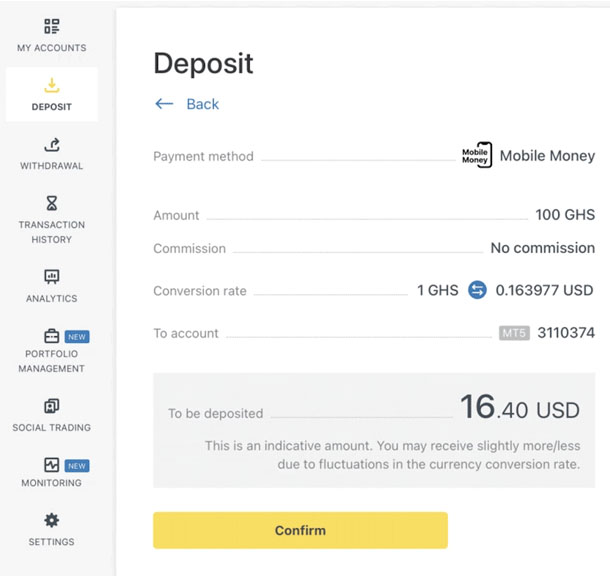
Funding your account should be fast, safe, and cost-effective. In Uganda, mobile money is king. Most brokers now support MTN Mobile Money and Airtel Money, alongside traditional bank transfers and e-wallets like Skrill and Neteller.
| Payment Method | Typical Deposit Speed | Notes for Uganda |
|---|---|---|
| MTN Mobile Money | Instant | Most popular among Ugandan traders |
| Airtel Money | Instant | Widely accepted, low fees |
| Bank Transfer | 1–3 business days | Conversion fees apply |
| Skrill / Neteller | 1 business day | Good for international transfers |
Brokers like Exness stand out because they allow instant withdrawals via MTN Mobile Money, meaning Ugandan traders can access profits immediately without waiting days.
Trading costs matter more for small accounts. In Uganda, the typical spreads on major pairs like EUR/USD are slightly higher due to regional liquidity issues.
Estimated cost per $1,000 trade for Ugandan traders
| Broker | Spread (EUR/USD) | Commission | Swap Fee (1-night hold) |
|---|---|---|---|
| Exness | 0.3 pips | $0 | $0.50 |
| Pepperstone | 0.1 pips | $3 | $0.45 |
| XM | 1.0 pips | $0 | $0.60 |
This table helps traders compare the total cost per trade before opening accounts. Ugandan traders should note that some brokers charge higher fees for local mobile money deposits.
Most brokers offer MetaTrader 4 (MT4), MetaTrader 5 (MT5), or cTrader. In Uganda, many traders use smartphones for trading due to unreliable internet at home. MT4 is beginner-friendly, while MT5 allows advanced charting and more order types.
| Platform | Popularity (%) |
|---|---|
| MT4 | 65% |
| MT5 | 30% |
| cTrader | 5% |
This shows that while MT4 dominates, MT5 adoption is growing among experienced traders.
Customer support is critical in Uganda, where time zone differences can delay responses. Brokers offering 24/5 English support, along with educational webinars and tutorials, are highly valuable. XM and FXTM provide content tailored for African traders, helping them avoid common beginner mistakes.
When trading forex in Uganda and the wider East African region, the challenge isn’t just finding a legitimate broker. The key is choosing one that fits your trading style, capital, and local usability needs. The brokers below are consistently reliable for Ugandan traders and provide options for beginners, scalpers, and professional traders alike.
Exness is widely favored among Ugandan traders for its flexible accounts and fast access to funds. Its Standard account allows traders to start with minimal capital, while the ECN account serves more experienced traders seeking competitive spreads.
Trader Fit:
Cost Snapshot (per $1,000 trade)
| Account Type | Spread EUR/USD | Commission |
|---|---|---|
| Standard | 0.3 pips | $0 |
| ECN | 0.0 pips | $3 |
Exness’s combination of low-cost trading, flexible deposits, and mobile money accessibility makes it ideal for traders who value both convenience and performance. Ugandan traders looking to start small or withdraw profits instantly will find it particularly user-friendly.
Start trading with Exness Broker
Pepperstone excels for traders who prioritize execution speed and low trading costs. Its Razor account offers razor-thin spreads, perfect for scalping and high-frequency strategies.
Trader Fit:
| Account | Spread EUR/USD | Commission |
|---|---|---|
| Razor | 0.1 pips | $3 per lot |
| Standard | 1.0 pips | $0 |
Pepperstone’s strength lies in cost efficiency and execution, making it a top choice for serious traders. However, mobile money deposits are limited, so it’s less convenient for traders relying on MTN or Airtel.
Avoid common beginner mistakes when using advanced strategies.
XM is ideal for beginners and learning traders. With micro and standard accounts starting as low as $5, it allows small-scale testing and strategy practice without heavy financial commitment.
Trader Fit:
| Account | Spread EUR/USD | Commission |
|---|---|---|
| Standard | 1.0 pips | $0 |
| Micro | 1.5 pips | $0 |
XM’s combination of low entry requirements and strong education makes it perfect for Ugandan traders who want to learn while trading. Beginners can focus on strategy development without worrying about losing large capital.
Explore XM accounts for small-scale trading.
IC Markets is built for high-volume traders and algorithmic systems. Its ECN accounts offer raw spreads and deep liquidity, ideal for professional strategies.
Trader Fit:
| Account | Spread EUR/USD | Commission |
|---|---|---|
| Raw Spread | 0.0 pips | $3.5 |
IC Markets is not recommended for beginners or traders relying on mobile money, but it’s excellent for Ugandan traders executing large or automated trades.
Learn more about IC Markets ECN accounts
FXTM stands out for its Africa-centric educational resources and local support, which helps traders avoid beginner pitfalls. It also provides multiple account options suitable for small or advanced trading.
Trader Fit:
| Account | Spread EUR/USD | Commission |
|---|---|---|
| Micro | 1.5 pips | $0 |
| ECN | 0.0 pips | $4 |
FXTM is particularly useful for Ugandan traders who want education and support alongside competitive trading conditions.
With multiple brokers offering different advantages, a clear comparison can help traders in Uganda, Kenya, and Tanzania quickly identify which broker fits their trading style, capital, and local usability needs. Below is a bar chart summary of the top five brokers, using three key metrics:
| Broker | Cost Efficiency | Mobile Money Usability | Trader Type Suitability |
|---|---|---|---|
| Exness | 9 | 10 | 9 |
| Pepperstone | 10 | 5 | 10 |
| XM | 7 | 6 | 8 |
| IC Markets | 10 | 4 | 9 |
| FXTM | 8 | 7 | 8 |
How to read the chart:
Cost Efficiency
Exness      ██████████ 9
Pepperstone ███████████ 10
XM          ███████    7
IC Markets  ███████████ 10
FXTM        █████████  8

Mobile Money Usability
Exness      ███████████ 10
Pepperstone █████       5
XM          ██████      6
IC Markets  ████        4
FXTM        ███████     7

Trader Type Suitability
Exness      ██████████ 9
Pepperstone ███████████ 10
XM          ████████    8
IC Markets  █████████  9
FXTM        ████████    8
This bar chart provides at-a-glance insight for East African traders. It clearly shows:
Selecting a broker isn’t just about finding the lowest spread or fastest withdrawals. For traders in Uganda, Kenya, and Tanzania, it’s about matching the broker to your trading style, capital, and goals. Below is a practical framework to make an informed decision.
The first step is understanding how you plan to trade:
Tip for East African Traders: If you’re unsure of your style, start with a broker that allows small trades with flexible accounts, such as Exness or XM, so you can experiment safely.
Once your style is clear, look for features that directly support your objectives without worrying about technical details like spreads or platforms:
East African traders should also evaluate daily usability factors:
For example, Exness offers flexible accounts that allow Ugandan traders to adjust their trading approach without reopening accounts, making it easier to adapt as you gain experience.
Before committing significant capital:
Testing ensures the broker fits your trading style and local usability needs without unnecessary risk. For an example of reliable demo account setup, you can read more on Exness demo accounts.
Combine the above steps for a structured approach:
This ensures you select a broker suited for your East African trading journey, balancing growth potential, usability, and learning opportunities. You can also explore strategies to grow a small account safely while learning with low capital.
Trading forex in East Africa comes with unique challenges and opportunities. While the right broker is important, your trading habits, risk management, and strategy implementation are what determine success. These tips are tailored for traders in Uganda, Kenya, Tanzania, and surrounding regions.
Many Ugandan traders make the mistake of starting with large capital before understanding the market. To avoid losses:
Risk management is crucial, especially for traders in volatile markets or those trading part-time.
Proper risk management ensures that even a losing streak doesn’t wipe out your account.
Having a plan prevents emotional decisions and keeps you focused:
For beginners, tools like MT4/MT5 journals or even simple spreadsheets are sufficient. Over time, this helps in developing a strategy tailored to your style.
For East African traders, liquidity and volatility matter:
Leverage the educational resources and analytical tools available:
For beginners, combining these tools with broker-provided educational content ensures better decision-making.
Many traders in East Africa get tempted to trade too frequently:
Discipline is often what separates consistently profitable traders from those who lose quickly.
The best traders are those who practice consistently:
Regular practice builds confidence and reduces the risk of emotional errors.
Forex trading in East Africa is both accessible and rewarding when approached methodically:
By following these steps, Ugandan and East African traders can minimize early losses, build confidence, and scale their accounts responsibly.
Trading success doesn’t happen overnight, but with the right broker, practical strategies, and disciplined execution, it’s fully achievable.