Physical Address
304 North Cardinal St.
Dorchester Center, MA 02124
Physical Address
304 North Cardinal St.
Dorchester Center, MA 02124

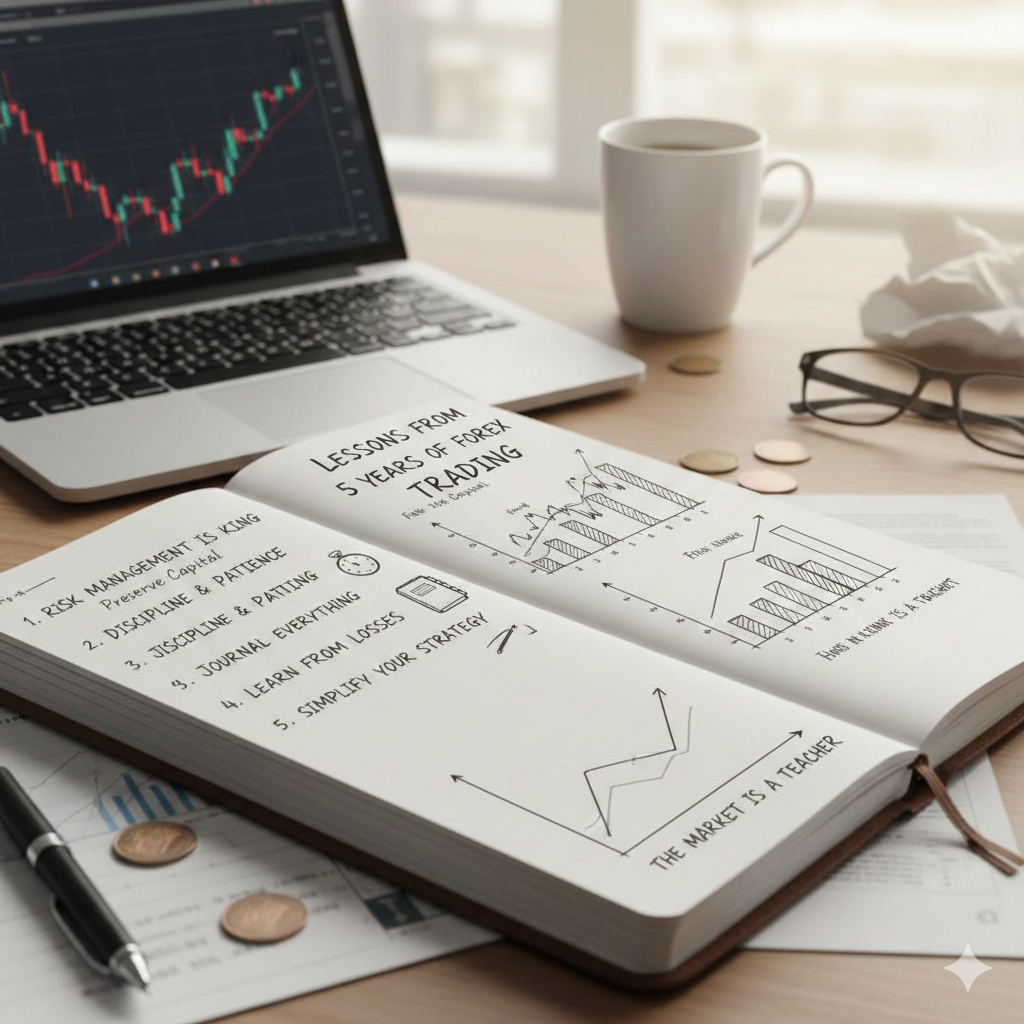
When I started forex trading over five years ago in Uganda, I believed that success came from finding the perfect strategy. I chased indicators, jumped between strategies, and focused more on profits than survival.
I quickly learned that forex trading is a skill built over time, and your mindset, risk management, and discipline matter more than any “secret strategy.”
This article shares real lessons from five years of live forex trading experience in Uganda, including mistakes, losses, broker lessons, risk management, and the mindset shifts that separate successful traders from those who quit early.
If you are a beginner, trading with a small account, or struggling with consistency, these lessons will save you years of frustration.
My first year was driven by excitement and unrealistic expectations. I traded impulsively, ignored stop losses, and believed every loss meant my strategy was broken.
Like many beginners, I:
These early mistakes are common, as explained in Mistakes I Made in My First Year of Forex Trading and How You Can Avoid Them.
For foundational knowledge about the forex market, see What Is Forex Trading? A Beginner’s Guide to the Foreign Exchange Market.
Trading from Uganda introduces challenges most global tutorials ignore:
These challenges forced me to become more disciplined. I learned to plan trades in advance, use strict stop losses, and avoid unnecessary trades.
For chart analysis, I relied heavily on TradingView, which helped me analyze higher-timeframe trends and reduce emotional trading.
https://www.tradingview.com
I learned that losses are not a signal to quit — they are feedback from the market.
Professional traders review losing trades calmly using journals and tools like Myfxbook, analyzing entries, exits, and risk levels.
https://www.myfxbook.com
I later expanded this lesson in Why Successful Forex Traders Treat Losses as Feedback During Volatile Markets, because this single concept separates long-term traders from gamblers.
Economic releases also affect price action, so tracking news on the Forex Factory economic calendar is essential.
https://www.forexfactory.com/calendar
After five years, I realized that risk management matters more than strategy.
I focused on:
This mindset is also explained in Can You Grow a Small Forex Account of Just $10?.
For a clear understanding of risk, Investopedia’s forex risk management guide is invaluable.
https://www.investopedia.com/forex-trading-4689743
Broker choice greatly affected my results. I traded with brokers like Exness, Pepperstone, and XM, learning that:
If you are unsure which broker to trust, these guides are useful:
High-impact news teaches that markets don’t move logically in the short term. Emotional traders get punished; patient traders wait for structure.
This lesson is demonstrated in How GBPUSD Reacts to US Tariff News: 2026 Volatility Trading Guide.
Educational platforms like BabyPips and Investopedia also help traders understand volatility and liquidity.
https://www.babypips.com
https://www.investopedia.com/forex-trading-4689743
Prop firm trading taught me:
See more:
Yes, but not the way social media promises. Forex rewards patience, discipline, emotional control, and long-term thinking.
See Can You Really Make Money Trading Forex? The Truth from Real Trading Experience for honest guidance.
After five years of forex trading in Uganda, one truth stands out:
Survival comes before profitability. Protect capital, control emotions, and keep learning — consistency follows naturally.
How long does it take to become profitable in forex trading?
Typically 3–5 years of disciplined practice and risk management.
Is forex trading harder in Uganda?
Infrastructure challenges exist, but they teach discipline and patience.
What is the biggest mistake beginner traders make?
Risking too much per trade and chasing fast profits.