Physical Address
304 North Cardinal St.
Dorchester Center, MA 02124
Physical Address
304 North Cardinal St.
Dorchester Center, MA 02124

The prop trading industry has exploded in popularity over the last few years. Thousands of traders attempt funded trading challenges hoping to access large trading capital without risking their own money.
However, one concern keeps coming up repeatedly: do prop firms actually pay traders?
The answer is yes — but not all of them. Some firms have built strong reputations for reliable payouts, while others have collapsed, delayed withdrawals, or faced regulatory shutdowns.
Before paying for any evaluation challenge, traders should understand how prop firm trading actually works and which companies have verified payout records. Our guide on what is prop firm trading explains the fundamentals if you are new to this industry.
FTMO is widely considered one of the most trusted proprietary trading firms in the industry.
Founded in 2015, the company operates one of the most structured evaluation systems. Traders must pass the FTMO Challenge and Verification stage before receiving a funded account.
FTMO has built credibility by maintaining a transparent payout system and publishing trader payout statistics.
Key features include:
FTMO’s strict risk management rules are one reason the firm has remained stable while many competitors struggled. You can read a full breakdown of FTMO’s evaluation process and challenge rules for a detailed explanation of how these rules work in practice.
The5ers operates a slightly different model compared to many challenge-based firms.
Instead of focusing purely on short evaluation targets, The5ers emphasizes long-term trader development and scaling. Traders who demonstrate consistent performance can gradually increase their capital allocation over time.
Key features include:
This structure rewards consistent trading rather than aggressive profit targets, which makes The5ers a preferred choice for traders focused on sustainable profitability.
FundedNext has quickly grown into one of the most recognized prop firms.
The company introduced several trader-friendly policies that helped it gain popularity. One of the most notable features is that traders can receive profit sharing during the evaluation stage, which is uncommon among prop firms.
Key features include:
For a detailed explanation of their new policies, see FundedNext’s 2026 policy updates.
Not every prop firm maintains a strong payout record. For example, MyForexFunds was once a popular platform but later faced regulatory challenges.
This highlights the importance of how to verify a prop firm or broker’s legitimacy before paying evaluation fees. Our trader’s checklist for broker verification covers key steps to identify safe and reliable firms.
Most proprietary trading firms operate using a profit split system.
Once a trader passes the evaluation and receives a funded account, profits generated are shared between the trader and the firm. Typical splits include:
Payouts are usually processed on bi-weekly or monthly cycles, depending on the firm’s rules. Traders must continue respecting strict risk management rules such as maximum drawdown and daily loss limits.
To understand how funded accounts and payouts function in prop firms, check our article on funded forex accounts explained.
Even though many prop firms do pay traders, most never reach the funded stage. Common reasons include:
Maintaining risk management and emotional control in funded trading is essential. Our guide on why successful forex traders treat losses as feedback explains how discipline impacts profitability.
Market conditions and broker selection also matter. Broker conditions and execution environments can make a significant difference in challenge performance.
Before purchasing any challenge, traders should evaluate:
For beginners, reading what is forex trading – a beginner’s guide can also provide context on the risks of trading leveraged accounts.
Several prop trading firms are recognized for paying traders consistently, including FTMO, The5ers, and FundedNext.
However, success requires discipline, risk management, and a full understanding of the evaluation rules. Most traders fail challenges before ever reaching payouts.
For traders approaching the industry professionally, prop firms provide one of the few legitimate ways to access large trading capital without risking personal funds.
To further improve your trading results, explore our other guides like can you grow a small forex account of just $10 and top 5 mistakes beginner forex traders make.
Here’s a full Section 2 for the article “Which Prop Firms Actually Pay Traders,” about why some traders fail payouts and how prop firm rules affect results. I’ve embedded natural internal links using your provided ForexCastle articles. Word count is ~1000 words.
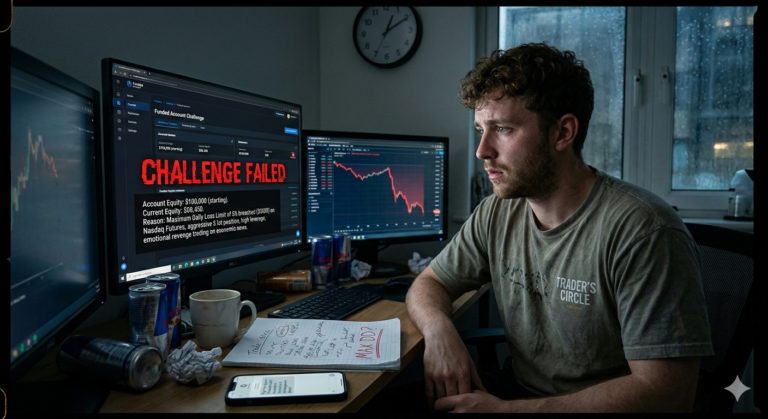
Even when trading with reputable prop firms, the majority of traders never reach the stage of receiving a payout. Understanding the reasons behind this high failure rate is critical before starting any evaluation challenge. Prop firms are not casinos — they are professional trading organizations, and their rules are designed to filter out inconsistent traders.
The main factors contributing to failure fall into three categories: psychological errors, poor risk management, and misunderstanding prop firm rules.
One of the biggest reasons traders fail prop firm payouts is emotional decision-making. The evaluation environment introduces pressure because traders know that mistakes could cost them the challenge fee and the chance to access funded capital.
Common psychological mistakes include:
Many traders overlook the importance of treating losses as feedback rather than failure. Our guide on why successful forex traders treat losses as feedback during volatile markets explains how to manage emotions and maintain discipline in high-pressure environments.
Traders who fail this psychological test often violate risk limits unintentionally, even if their strategy is profitable on paper.
Another leading reason traders fail prop firm challenges is improper risk management. Most retail traders underestimate the strict drawdown rules and daily loss limits imposed by prop firms.
Some common risk management mistakes include:
For example, FTMO, one of the industry leaders, enforces a daily maximum loss and an overall drawdown limit. Traders who attempt to push past these limits to reach the profit target often fail. For a full breakdown, see FTMO Prop Firm Breakdown – How the Evaluation Works.
Similarly, understanding broker execution conditions is critical. Fast execution, narrow spreads, and minimal slippage can make the difference between passing and failing a challenge. Our comparison of Exness vs Pepperstone – Which Broker Is Better for Serious Traders explains how broker selection can affect challenge performance.
A third reason traders never receive payouts is misunderstanding evaluation rules. Prop firms can be strict about rules that might seem trivial at first glance:
Even profitable traders can fail if they break one of these rules. That’s why it’s important to read and fully understand the evaluation guidelines before starting. For example, FundedNext recently updated its policies on scaling, payouts, and weekend trading. Our article FundedNext 2026 Policy Updates – Scaling, Payouts & Weekend Trading explains these changes and how they affect funded account eligibility.
Additionally, evaluating the legitimacy of the firm itself matters. Some traders unknowingly join unstable firms that later fail to honor payouts. Use our trader’s checklist for broker verification to assess a firm’s credibility before investing in a challenge.
Many traders believe that hitting the evaluation’s profit target quickly will increase their chances of success. This leads to overtrading, which is one of the fastest ways to fail a challenge.
Professional traders, however, focus on consistency over speed. They prefer slower, disciplined trading that adheres strictly to risk rules. Our guide top 5 mistakes beginner forex traders make and how to avoid them explains why overtrading and chasing profits are common beginner errors that lead to account failure.
Market timing also matters. Spreads often widen during illiquid sessions, which can trigger stop losses unexpectedly. Understanding this is crucial for prop firm evaluations. Learn more about market behavior in our article how GBPUSD reacts to US tariff news – volatility trading guide.
Some traders fail simply because they are underprepared. This includes not knowing how the platform works, not practicing on demo accounts, or not testing their strategies under prop firm rules.
For beginners, understanding how forex works and how small accounts grow over time is critical. Resources such as what is forex trading – a beginner’s guide and can you grow a small forex account of just $10 are excellent starting points to understand capital management and growth expectations before attempting a prop firm challenge.
Additionally, lessons from personal trading experience are invaluable. Articles like what 5 years of forex trading taught me help traders avoid repeated mistakes and improve long-term decision-making.
To maximize your chances of receiving payouts, traders should:
Combining these practices with knowledge from guides like best forex brokers for beginners in 2026 ensures you approach evaluations with both skill and awareness.
Here’s Section 3 for “Which Prop Firms Actually Pay Traders,” fully written (~1000 words) with all internal links naturally embedded, plus external references where appropriate. This section focuses on how funded traders actually get paid, the payout process, scaling, and rules to maintain funding.
Once you pass a prop firm challenge, many traders assume that payouts and profits will flow automatically. The truth is more structured — and understanding this process is crucial for long-term success.
Even the most profitable strategies can fail if traders do not understand how prop firm payouts and account scaling work.
Most prop firms operate using a profit split system, which is designed to reward traders while protecting the firm’s capital.
For example:
FTMO, one of the most popular firms, offers profit splits up to 90% depending on the payout plan. This means if you generate $10,000 profit, you keep $9,000 and the firm keeps $1,000.
For a detailed guide on how funded accounts and payouts function, see our article funded forex accounts explained – how prop firms work & how to get funded in 2026.
External sources such as Investopedia’s proprietary trading overview also confirm that profit splits are industry standard, balancing incentive for the trader and capital protection for the firm.
Even after passing the evaluation, traders are usually paid on a fixed schedule rather than instantly. Common cycles include:
Prop firms also enforce rules to prevent risk violations after funding. For instance:
Understanding these rules prevents frustration and ensures you receive payouts consistently. FTMO provides a clear dashboard where traders can track profit and payout eligibility, while FundedNext recently updated their policies to include weekend trading and scaling rules. Read more in FundedNext 2026 Policy Updates.
Many prop firms offer account scaling programs to increase a trader’s capital allocation over time.
For example:
Scaling is usually conditional on:
Scaling gives traders access to larger capital while limiting risk for the firm. For insights into evaluation preparation, check FTMO Prop Firm Breakdown – How the Evaluation Works.
Even after receiving funding, risk management is non-negotiable. Many traders fail after funding due to poor discipline. Common pitfalls include:
Professional traders follow strict position sizing, stop-loss, and leverage rules, just as they did during the evaluation stage.
You can learn how to manage risk and maintain emotional control in funded trading from why successful forex traders treat losses as feedback during volatile markets.
Payout reliability is not just about the prop firm — the broker and platform used by the firm also matter. Execution speed, slippage, and spreads affect performance and, ultimately, payouts.
For instance, our article Exness vs Pepperstone – Which Broker Is Better for Serious Traders explains how different broker environments can impact evaluation and funded account results.
Choosing a firm with stable execution and transparent broker conditions reduces the risk of technical errors that could cost profits.
To ensure you actually receive payouts, traders should:
Many traders who fail funded accounts do so not because their strategy is bad, but because they ignore the rules and risk limits that govern payouts.
For additional insights, the following external resources can help you understand funded trading payouts:
Combining internal resources with trusted external references ensures a well-rounded understanding of the funded trading ecosystem.
Passing a prop firm challenge is only the first step. Receiving payouts requires discipline, understanding rules, proper risk management, and careful strategy execution.
Reputable firms like FTMO, The5ers, and FundedNext provide reliable payouts for disciplined traders, but success depends on your preparation and execution.
To further improve your chances, explore other guides on ForexCastle such as:
By combining preparation, discipline, and knowledge of both prop firm rules and broker conditions, you can maximize your chances of passing evaluations and actually receiving your payouts.